
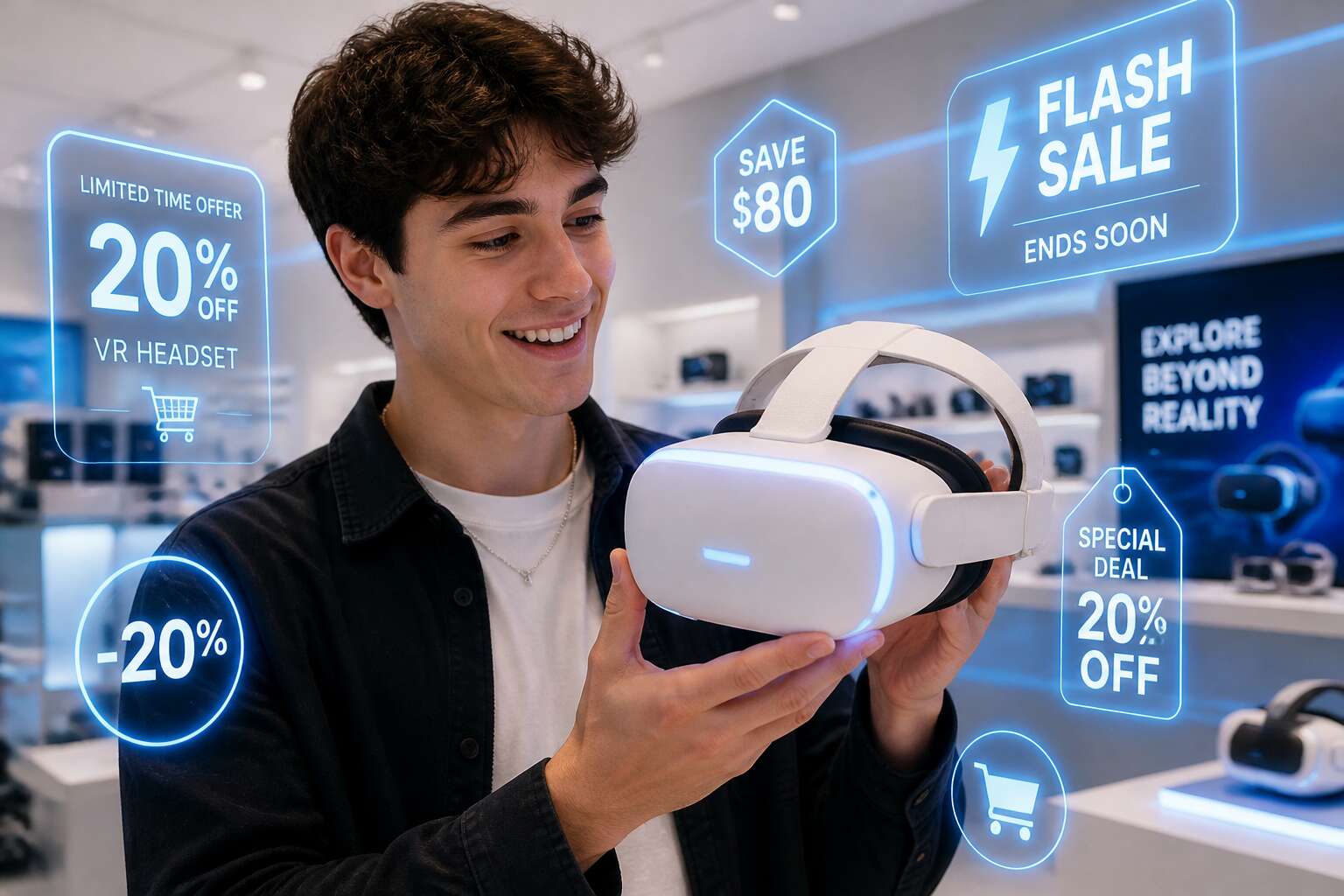
Why Now Is the Perfect Time to Buy a VR Headset
Market Trends and Price Drops
If you have been waiting for the right moment to buy a virtual reality headset, the market is finally cooperating. Prices have dropped sharply across major brands, and the current vr headset sale landscape in South Africa mirrors a global push to clear inventory. Retailers are discounting older models to make room for newer hardware, which means real savings for shoppers who act now.
- Flagship headsets are seeing price cuts of up to 30 percent.
- Bundles now include controllers and games at no extra cost.
I have tracked this market for years, and these price drops are not a gimmick. Supply chains have stabilised, competition among manufacturers has intensified, and that pushes prices down. For South African buyers, the vr headset sale cycle has rarely aligned this well with local stock levels. The window is open, and the numbers favour you.
New Model Releases Driving Discounts
The arrival of next generation hardware is quietly reshaping the used and new market for virtual reality. As manufacturers finalise their latest flagship devices, the previous generation is not just ageing, it is being aggressively repositioned. Retailers holding old stock face a narrowing window to move units before the new models dominate consumer attention. This pressure creates a distinct vr headset sale environment where margins are sacrificed for momentum.
Consider the specific mechanics of this shift. A popular headset model, once considered premium, is now superseded by a unit with better lenses and lighter ergonomics. The older unit still performs admirably, but its retail space is shrinking. South African distributors are responding with price adjustments that reflect a need for speed, not a lack of quality.
– Previous flagship models are often dropped by 25 to 40 percent when the successor is announced.
– Retailers bundle accessories like carrying cases and spare cables to sweeten the deal.
– Online stores sometimes offer extended warranties on outgoing stock to reassure buyers.
The local market here is particularly sensitive to these cycles. Because shipping costs and import duties add a base price to every unit, South African shoppers rarely see the aggressive US pricing. However, the current glut of older inventory is flattening that difference. For the first time in months, the local price of a high end unit is closer to the global average. The decision to buy is now a calculation of timing. If you wait for the new hardware, you pay full price for incremental improvements. If you move now, you secure a proven system at a price that reflects its transition to a legacy product. The vr headset sale is not about clearing broken goods, it is about making room for the future, and the current discounts are the cost of that transition. The window for these specific savings closes as soon as the new stock lands on shelves.
Seasonal Sales and Holiday Events
The hesitation to buy is understandable, but the calendar itself is part of the vr headset sale equation. The ebb and flow of retail events in South Africa does not wait for your perfect moment. It moves on a fixed schedule, and the current window sits between major price resets and the arrival of new stock, creating a valley of opportunity.
Consider the seasonal mechanics that have already played out this year:
1. Black Friday and Cyber Monday cleared the year’s most cautious inventory, prompting distributors to reprice the remainder.
2. The post-festive lull in January forces stores to maintain velocity, which keeps discounts alive.
3. The back-to-school period in February redirects budgets, leaving warehouse space for premium tech at a fraction of the cost.
These factors converge now, not later. When the next wave of holiday spending hits, the stock you are eyeing will be gone, replaced by units at a higher margin. The real driver is stock depletion. A retailer sitting on a pallet of headsets cannot justify holding it through the quiet months. The pressure to convert that asset into cash is what keeps the current vr headset sale alive. Once the new models land, that pressure evaporates, and so does the pricing flexibility. The hunt for a deal is not about waiting for the next holiday, it is about catching the retailer between their own deadlines and yours.
The Impact of Previous Generation Price Cuts
Retailers in South Africa have reduced premium VR headsets by up to 30% since the newest models arrived. That drop turns the previous generation into a rational purchase.
The hardware from last cycle still delivers full immersion. It still tracks movement sharply. The only difference is the absence of a few incremental features, which most users rarely notice. For a vr headset sale, these price cuts create a window where value and performance align.
- Full game libraries remain compatible
- Accessories are cheaper and plentiful
- Warranty support stays active from local stores
Waiting for further reductions often proves counterproductive. Stock gets cleared, and remaining units vanish. The current vr headset sale reflects distributors clearing space, not a permanent discount. When that inventory thins, pricing reverts upward.
Types of VR Headsets and What Fits Your Budget
Standalone Headsets: Convenience and Value
Most conversations about virtual reality skip past the quiet workhorse of the market. The standalone headset. It sits in the shadow of its PC-tethered siblings, yet it carries the weight of everyday immersion. When you strip away the cables and the external sensors, you are left with a device that offers a strange form of freedom. Movement becomes instinctive. The barrier to entry drops, not just in cost, but in complexity. This ease of use is precisely why a vr headset sale often features these models so prominently. People want the experience without building a shrine to their gaming rig.
The value proposition is honest. You are trading raw graphical fidelity for unadulterated convenience. That trade-off is often the correct one. For the South African consumer, where space and reliable power can be premium commodities, the simplicity of a self-contained unit is a form of practical wisdom. Consider what you are actually buying:
1. The processing unit, battery, and display, all unified in a single chassis.
2. A library of software that is optimised for the specific hardware constraints.
3. A room-scale tracking system that relies on internal cameras, not external beacons.
This architecture creates a different kind of intimacy with the digital plane. There is no umbilical cord to trip over, no tether to the physical world. When you search for a vr headset sale, you are often chasing this specific kind of liberation. The price of admission for that liberty has historically been high, but recent market shifts have made the entry point more humane.
The question of budget is a question of introspection. How much do you value your own friction? A premium standalone unit offers a seamless, polished path into the metaverse. A more modest tier might sacrifice a bit of visual clarity, but it still grants the core dopamine hit of interactive presence. Ultimately, the best device in a vr headset sale is the one that removes the obelisk between you and the virtual world. You are not buying a gadget; you are buying the absence of barriers.
PC-Tethered Headsets for High-End Performance
The heft of a tethered headset cable is a curious thing. It is a physical reminder that you are still anchored to a desktop. For the purist, this is not a nuisance; it is a covenant. PC-tethered headsets remain the arena for those who demand the absolute zenith of visual clarity and processing power. They are not seeking convenience. They are seeking a superior illusion that requires a serious investment in both the headset and the computational horsepower behind it. In the current market, a vr headset sale will often lure you with discounts on these flagship models, tempting you to finally take the plunge. But the purchase is only half the equation.
The real currency here is your graphics card. The experience hinges on the symbiosis between the display inside the headset and the renderer in your tower. South African gamers, who often contend with load-shedding and the cost of premium hardware, view this as a calculated commitment. When you see a compelling vr headset sale for a PC-tethered unit, the immediate reaction might be to grab it. However, the wiser move is to assess the full pipeline of your rig.
These devices are voracious consumers of data. They reward a steady frame rate with a level of presence that standalone units cannot match. High-refresh-rate displays and foveated rendering are the new battlegrounds. To get the most out of this tier, you need:
– A GPU that handles dedicated graphics without breaking a sweat.
– A processor that prevents bottlenecking during complex physics simulations.
– A display port connection that is reserved exclusively for the headset.
The disappearance of external base stations from many modern tethered models is a welcome evolution. Inside-out tracking on these premium units strikes a balance, offering the fidelity of the PC connection without the mess of wall-mounted beacons. The result is a stationary experience that feels fluid. When you are weighed down by a cable, you tend to sit rather than roam, which makes spatial awareness less frantic. This is the console gamer’s preference taken to its logical extreme. An investment here is about extracting every ounce of detail. The patience required to set up the software and configure the settings is substantial. Yet, for those who are willing to put in the work, finding the right vr headset sale for a tethered system is the beginning of a long and rewarding courtship with the digital realm.
Console-Compatible VR Options
It is a curious arithmetic, this business of choosing a headset. We have already weighed the anchor of the PC-tethered beast and the airy freedom of the standalone unit. Yet there is a third path, a middle kingdom for those who are not ready to rebuild their desktops. This is the realm of the console-compatible headset.
Here, the etiquette is refreshingly simple. The console gamer understands reciprocity. They buy a machine, they buy its games, and they expect the peripherals to fall in line. A PlayStation headset, for example, speaks the native tongue of the console. There is no wrestling with a graphics card driver, no whispered prayers for a frame rate that will not stutter. It is the digital equivalent of a well-mannered house guest who knows exactly where the teacups go.
For the budget-conscious, this is often where the most pragmatic vr headset sale appears. The hardware is not designed to be the absolute pinnacle of the market. Instead, it is curated for a specific audience. Think of what the console does effortlessly:
– It manages the experience behind the scenes, reducing the fuss.
– It offers a library of games tailored to a standard level of performance.
– It provides a cost of entry that does not require a second bond on the home.
The social ritual of gaming in South Africa often revolves around this set-top box. Load-shedding schedules are consulted with the gravity of a stock market report, and the console is the dependable heart of the household’s entertainment. A vr headset sale that targets this demographic is less about raw horsepower and more about seamless integration. The proposition is simple: plug in, calibrate, and escape the silence of an evening without electricity. It is a pragmatic choice, wrapped in the allure of new experiences. The astute shopper watches these price drops with a keen eye, recognizing that this tier offers the most frictionless entry into virtual worlds for their specific lifestyle.
Budget Picks Under $300
The most honest advice for a shopper in South Africa is to ignore the flagship models entirely. The real value in any vr headset sale is often hidden in the previous generation or the base model of a popular line. These devices, frequently sitting under the $300 mark, represent a deliberate trade. You abandon the highest refresh rate or the most precise tracking in exchange for a price that does not punish your monthly budget.
This price tier is more forgiving of your environment. You do not need a sprawling living room or a dedicated gaming den. The hardware is designed for the average lounge, the space between the couch and the television. For many local gamers, the choice is not about the pinnacle of technology. It is about access. A budget headset simply lowers the wall of entry.
– It provides a functional library of experiences without the premium tax.
– It relies on simpler controllers that are easier to replace if dropped.
– It requires less processing power, making it friendlier to older laptops or consoles.
The difference between a R12,000 headset and a R5,000 headset is often marginal in the daylight of real usage. The pricier unit offers sharper lenses and better audio, but the cheaper one still delivers the core magic of presence. For the sceptical buyer, this is the smartest point of entry. It allows you to test the waters of virtual reality without committing to a second mortgage on your entertainment centre. A savvy pursuit of a vr headset sale in this category yields a device that performs admirably, even if it lacks the prestige of the premium tier.
Mid-Range and Premium Models
Between the entry tier and the flagship lies a quieter truth about virtual reality. The mid-range headset, often dismissed as a compromise, is where many South African buyers actually live. It offers established tracking without demanding a second GPU upgrade. Find the right vr headset sale, and this tier becomes a smart compromise!
Premium units push further into the uncanny. The distinctions go beyond resolution:
- Wider field of view that pulls you into the peripheral.
- Lenses that hold sharpness where cheaper glass blurs.
- Weight distribution that disappears after an hour of play.
The price stings. Yet for those who spend hours inside simulations, that clarity stops being a luxury and becomes a necessity. I have watched buyers hesitate at the till, weighing the rand against the immersion. A vr headset sale aimed at premium stock does not appear often; when it does, the units go fast.
Enterprise and Advanced Headsets
The enterprise tier lives in a different economy. While consumers debate refresh rates, businesses are paying for headsets that track eye movement, scan faces, and render with foveated precision. These units are the corporate behemoths of virtual reality. They ask for large budgets and even larger computing power in return.
Advanced models now feature:
– Eye tracking for natural interaction
– High-resolution displays that eliminate the screen-door effect
– Built-in sensors for facial expression capture
– Modular designs for easy repair and upgrade
The price stings on a different level. You are not paying for immersion. You are paying for data accuracy and workflow efficiency. For engineering firms, medical schools, and architecture practices, these costs justify themselves. The escape hatch is that the lines blur. Some of these advanced features trickle down to consumer models over time. If you are watching for a vr headset sale with enterprise stock, expect a rare event. When it happens, the savings are substantial, even if the initial quote makes your accountant wince. That vr headset sale you keep seeing is usually aimed at the consumer. The professional grade gear moves quietly and without fanfare, because the buyers are not browsing for deals. They are responding to tender requests. Your timing must be perfect and your negotiation sharp to get those discounts.
Key Features to Compare Before You Purchase
Display Resolution and Refresh Rate
Two numbers define your virtual reality experience more than any sale price. Display resolution and refresh rate are the silent arbiters of comfort and clarity. Resolution determines how sharp objects appear. Refresh rate determines how smoothly motion tracks your head.
Compare these specifications before committing to a vr headset sale:
- Per eye resolution, not the combined marketing figure.
- Refresh rate of at least 90 Hz for nausea free use.
- Pixel persistence, which impacts motion blur.
Higher resolution demands stronger graphics hardware. Lower refresh rates cause dizziness for many users. South African shoppers often face import premiums, so a vr headset sale might hide older panels. The technical sheet reveals the truth about display parameters.
Tracking Technology and Controllers
Tracking technology determines how faithfully your movements translate into the virtual world. Inside-out cameras have made setup easier, but external base stations still offer superior precision. Watch for latency figures, as higher numbers undermine immersion.
Controllers should match your grip and habits. Some buttons require awkward finger stretches. Ergonomic design matters more than marketing promises. Older wands may lack modern haptics.
Consider these practical checks:
- Test finger tracking without touching buttons.
- Verify battery life for four hour sessions.
- Ask about replacement controller costs.
That last point hurts when you accidentally smash a wall. South African shoppers know the import premium makes spares precious. Evaluate tracking volume and control weight before committing to a vr headset sale.
Comfort and Weight Considerations
Comfort is the silent killer of virtual reality enthusiasm. A headset with impressive specs becomes a paperweight when it induces neck strain within thirty minutes. Weight distribution matters more than total mass. A balanced design transfers load across the skull, while a front-heavy unit pulls your face forward like gravity has a personal vendetta. South African temperatures add another layer. Local heat makes ventilation critical, because fogged lenses ruin sessions faster than software glitches ever could.
The facial interface deserves scrutiny. Cheap foam soaks up sweat and deteriorates quickly, especially in our climate. Look for replaceable padding and consider how the headset breathes during intense movement. Pressure points on cheekbones and forehead create distraction that breaks presence. Some units accommodate glasses wearers better than others, with deeper eye compartments and adjustable focal distance. Try before you buy whenever possible.
Here is what I test during any vr headset sale evaluation:
– Headstrap adjustment range and locking mechanism
– Centre of gravity when tilted forward
– Lens distance from the eyes
– Overall weight on the bridge of the nose
– Cooling system noise levels
The counterweight effect of an integrated battery changes the dynamic entirely. Rear-mounted units feel lighter despite similar mass. A snug fit that distributes pressure evenly across the occipital region allows longer sessions. Ignore the glossy marketing numbers and pay attention to how the device actually settles on your skull.
Game Library and Ecosystem Compatibility
Before committing to any discount, the game library defines the experience. A vr headset sale might offer tempting hardware prices, but a sparse catalogue turns that savings into buyer’s remorse. Look for platforms with deep backlogs and regular release schedules. Meta’s standalone titles, Steam’s PC VR library, and PlayStation’s exclusives each serve different play styles.
Ecosystem compatibility goes beyond storefronts. Check cross-buy options, cloud saves, and whether your existing game accounts transfer. For families, library sharing matters. For competitive players, leaderboard integration is non-negotiable! These points matter during any vr headset sale evaluation:
- Number of exclusive titles worth the asking price
- Accessibility of demos and free content
- Support for mods or community creations
- Subscription services that add ongoing value
A robust ecosystem keeps the headset relevant long after the initial hype fades. The hardware ages, but the library persists.
Wireless and Room-Scale Capabilities
Wireless freedom changes the psychology of play. When I can spin, crouch, and step without tripping over a cable, the virtual space feels less like a screen strapped to my face and more like an actual place. Room-scale tracking builds on that illusion, mapping your physical boundaries into the digital world. During any vr headset sale, ask how the system handles guardian systems and playspace reconfiguration. Some headsets lose tracking when you turn your back to the sensors, while others rely on inside-out cameras that follow you effortlessly.
The practical limits shape the experience as much as the hardware:
– Battery life for wireless sessions
– Minimum play area dimensions
– Sensor placement and setup complexity
– Ability to switch between seated and room-scale modes
A cheap headset with poor room-scale support can turn an exciting purchase into a frustrating one. Prioritise the freedom that matches your space.
Where to Find the Best VR Headset Discounts
Official Manufacturer Stores and Bundles
According to a 2023 consumer survey, buying directly from a manufacturer can cut costs by nearly a fifth during any vr headset sale. I have seen these stores quietly list certified refurbished units, complete with the same warranty as new models. The clearance section alone often holds hidden deals.
Bundles deserve equal scrutiny. A typical manufacturer bundle pairs the headset with two controllers, a charging dock, and one popular title. Some even throw in a three-month subscription to a VR fitness platform! The combined value easily surpasses the sum of its parts.
When hunting for the best vr headset sale, check the official store’s outlet page first. Then compare regional bundle options, since South African inventory sometimes differs from global stock. Look for these bundle components:
- First-party accessories like spare batteries
- Downloadable game vouchers
- Extended service plans
A direct search at the source remains the most reliable path to genuine savings.
Major Online Retailers and Flash Deals
The online retail landscape offers a different hunting ground altogether. South African shoppers often find that Takealot and Evetech host their own exclusive price cuts, separate from what the brand itself promotes. These platforms occasionally surprise with instant discounts during their daily deals, and savvy buyers know to check the tech section after midnight for fresh listings. A quick refresh of your cart might reveal a price shift of a few hundred rand within hours.
Major international platforms like Amazon and Newegg remain viable options, though shipping and import duties require careful calculation. However, their lightning deals represent a distinct category. These flash promotions have a fixed time limit, creating urgency that permanent sales lack. Stock rotates frequently, so persistence pays off.
Flash deals differ from standard promotions in one crucial way: their unpredictability. A headset might appear at a spectacular price, only to disappear as quickly as it came. This requires regular browsing, checking price tracking tools, and acting decisively when the numbers align in your favor. For those who find this exhilarating rather than exhausting, the rewards can be substantial. Restocks happen occasionally, but no pattern exists to predict them.
Refurbished and Open-Box Options
Refurbished units often hide the best value in a vr headset sale. Certified pre-owned devices from official channels receive rigorous testing, replacing worn components. South African buyers can explore Carbonite’s classifieds or BidorBuy’s auction listings for open-box deals, though patience is essential. I once found a nearly new headset for half the retail price simply because the original packaging had been damaged.
Consider these points when chasing open-box bargains:
- Verify the warranty status and return policy before committing.
- Inspect photos for scratches on lenses or controllers.
- Confirm the device has not been activation locked to a previous account.
Local pawn shops and tech refurbishers occasionally stock returned models, but they rarely advertise online. Ask directly at stores like Incredible Connection or Wootware. A thorough check of the device’s firmware history can reveal hidden issues. The best deals appear when you balance risk against reward, so keep your standards high.
Price Tracking Tools and Alerts
Price tracking tools watch the market while you go about your day. Services such as Pricecheck and Keepa monitor South African retailers and alert you the moment a vr headset sale appears. These platforms record price history, so you can spot genuine discounts rather than inflated markdowns.
Set alerts for specific models, not just broad categories. A notification for the exact headset you want saves time. Some tools even track second-hand marketplaces, giving you an edge over casual shoppers.
Consider these approaches:
– Use browser extensions that compare prices across multiple stores.
– Check daily deal websites like OneDayOnly and Takealot’s daily deals.
– Follow local tech forums where members share flash sale sightings.
The right alert can mean the difference between paying full price and catching a vr headset sale before stock runs out.
Trade-In Programs and Credit Card Offers
I have watched shoppers miss the best deals because they ignored the value sitting in their own cupboards. Your previous generation headset still holds worth, and South African retailers such as Incredible Connection and Samsung Experience Stores accept trade-ins. That old hardware becomes a direct discount on a newer model, softening the sting of planned obsolescence.
Credit cards add another layer of savings. FNB and Standard Bank frequently run rotating partner promotions, sometimes offering 10% back or reduced interest on electronics. Redeeming rewards points during a vr headset sale can shave hundreds off the price. Consider these routes:
- Trade in a PlayStation VR or Oculus Quest at the store counter.
- Check your bank’s rewards portal before making any purchase.
- Look for cards with zero percent instalment plans to spread the cost.
Stacking trade-in credit with a card offer often produces the lowest out-of-pocket total during a vr headset sale.
Common Mistakes to Avoid When Buying a VR Headset
Ignoring Minimum PC Requirements
Nothing kills the joy of a vr headset sale faster than a PC that fails to launch the headset. The minimum requirements are not a suggestion. Ignore them and your purchase will not run at all.
Trust me, check the manufacturer’s specification sheet before you click buy. Look at your PC’s GPU, RAM, and USB ports. Some headsets demand specific port versions or Bluetooth capabilities. Your processor matters too, especially for PC-tethered models.
- Compare your system’s specs against the headset’s listed requirements
- Confirm your graphics card supports the required output
- Plan for future software updates, not just today’s titles
A vr headset sale only counts as savings when the equipment works with your setup. Without compatibility, you face return shipping costs and disappointment that no discount can fix.
Overlooking Extra Costs Like Accessories
That R4,999 price tag on a vr headset sale often tells only half the story. The headset itself may be discounted, but the supporting gear arrives at full price. Controllers, replacement face cushions, and a proper carry case add up quickly. One buyer in Cape Town spent nearly R2,000 on accessories alone before the end of his first week.
Think about what you actually need before checkout:
- Replacement batteries and charging docks
- Ceiling mounts or pulley systems for cable management
- Prescription lens inserts if you wear glasses
These extras rarely appear in the sale banner. When you budget for a vr headset sale, set aside a separate amount for the surrounding gear. That separation keeps the discount honest and prevents a bargain from turning into a bill.
Falling for Unclear Warranty Terms
Warranty terms hide beneath the discount. A vr headset sale often advertises a twelve month guarantee, but the coverage details remain buried in fine print. One Johannesburg buyer sent his unit back twice within three months, only to learn his policy excluded the exact defect he reported.
Before you pay, confirm what the warranty actually protects:
- Battery degradation over time
- Controllers and their joystick drift
- Shipping costs for repairs and replacements
Each of these points changes the true value of your purchase. Ask whether the manufacturer or the retailer handles claims. Ask whether a refurbished unit carries the same cover as a new one, and get the answer in writing! Unclear terms on a vr headset sale can turn a great price into a fragile investment.
Choosing the Wrong Platform for Your Games
Choosing the wrong platform for your games is a costly error. Many buyers spot a vr headset sale and assume every headset plays every title. That assumption breaks against storefront walls. A PC-tethered headset cannot run standalone exclusives. A console unit ignores your Steam library entirely.
Check the ecosystem before you pay. Your existing games determine which headset makes sense. The platform controls access to titles, updates, and online multiplayer. A bargain price means little when the device cannot launch the games you actually play.
Not Measuring Your Play Area
You bought a vr headset sale bargain and discovered your living room cannot fit the required play space. The headset tracks your movements, but your coffee table tracks your shins. Room-scale VR needs actual room. The packaging says “minimum 2m by 2m” in fine print, which you ignored because the discount was tempting.
Your play area determines everything. A cramped space turns immersive games into a cautious shuffle. You will spend more time checking your boundaries than exploring virtual worlds. South African homes often have compact lounges, so measure before you pay.
- Clear furniture from the intended play space
- Check ceiling height for overhead arm movements
- Account for doorways, light fittings, and pets
That vr headset sale price loses its appeal when you crack your knuckles on a wall during a boxing game. Your measuring tape would have saved both your shins and your dignity.

0 Comments