
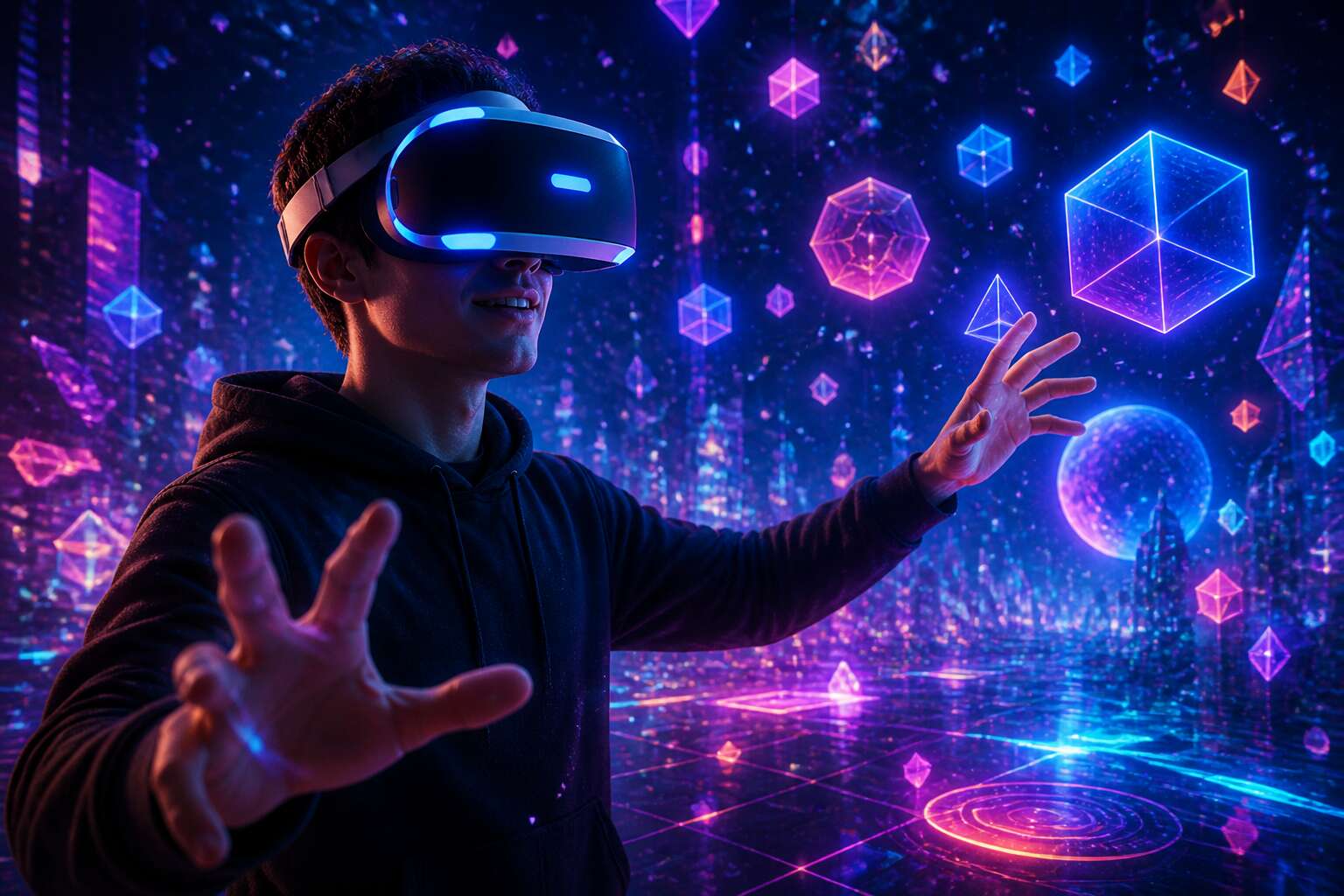
Foundations of Virtual Reality
Ask three tech enthusiasts to define the virtual reality meaning, and you will get four contradictory theories. I have heard them all. The foundation of VR is less about headsets and more about perception. It is a constructed sensory experience that tricks your brain into accepting a fabricated world.
- Immersion, which replaces your physical surroundings with a digital scene.
- Interactivity, allowing your movements to alter the virtual space in real time.
- Feedback, such as haptic signals, to convince your nervous system.
These elements work together to create presence. Without presence, the entire experience collapses into a glorified screen! Understanding this foundation makes the virtual reality meaning far less mysterious, and far more impressive.
The Psychological and Experiential Core
Ask a Cape Town gamer why they keep returning to a headset, and you will hear about escape. But the virtual reality meaning runs deeper than mere diversion. Your brain, that stubborn organ, treats simulated spaces as real. It sweats, startles, and swoons. This is the experiential core, where perception overrides logic.
Consider what happens during a virtual climb. Your palms itch. Your stomach drops. Your rational mind knows it is pixels. Your amygdala does not care. This dissonance creates a unique psychological state, one that researchers call presence. Presence is not a gimmick. It is a full body conspiracy.
- Presence tricks your spatial awareness.
- It alters your sense of time.
- It even reshapes your memory of events.
So the true virtual reality meaning lies in this bodily conviction. Technology matters less than belief. And that belief, once installed, changes how you see the ordinary world.
Varieties and Practical Applications
Most people think they understand the virtual reality meaning, but the technology is far more nuanced than strapping on a headset. It is a tool that engineers your perception, replacing the physical world with a simulated one. The implications are staggering, and we are only just beginning to scratch the surface.
The practical applications span far beyond gaming, which is where most attention lingers. In medicine, surgeons rehearse rare, complex procedures in a risk-free 3D environment. Architects walk clients through buildings that don’t exist yet, catching design flaws before a single brick is laid. For the corporate world, the technology is a training powerhouse.
Here is how industries are wielding it today:
– PTSD therapy, exposing patients to controlled triggers in a safe space.
– Remote collaboration, where teams feel physically present in the same room.
– Retail analytics, tracking where a shopper’s gaze lingers to improve shelf placement.
The experience is visceral, not passive. You are not just looking at a screen; your brain believes you are somewhere else, which sparks a physiological response. In South Africa, forward-thinking agencies are using this to sell property across vast distances, letting a buyer in Johannesburg wander a beachfront home in Durban without leaving their office. This is not a gimmick; it is a fundamental shift in how we interact with data and stories.
Looking Ahead: The Future of Virtual Reality
As we look ahead, the virtual reality meaning shifts from escapism to something more profound. I find myself watching how South African developers are repurposing VR for township education and medical training in rural clinics. The technology is becoming less about spectacle and more about utility.
- Haptic suits that let you feel a handshake across provinces
- Eye-tracking interfaces that respond before you blink
- Shared spaces where Capetonians and Joburgers collaborate as avatars
These developments will redefine how we work, learn, and connect. The virtual reality meaning will keep evolving, shaped by the people who use it daily. We are only beginning to understand what this medium can do!
0 Comments