
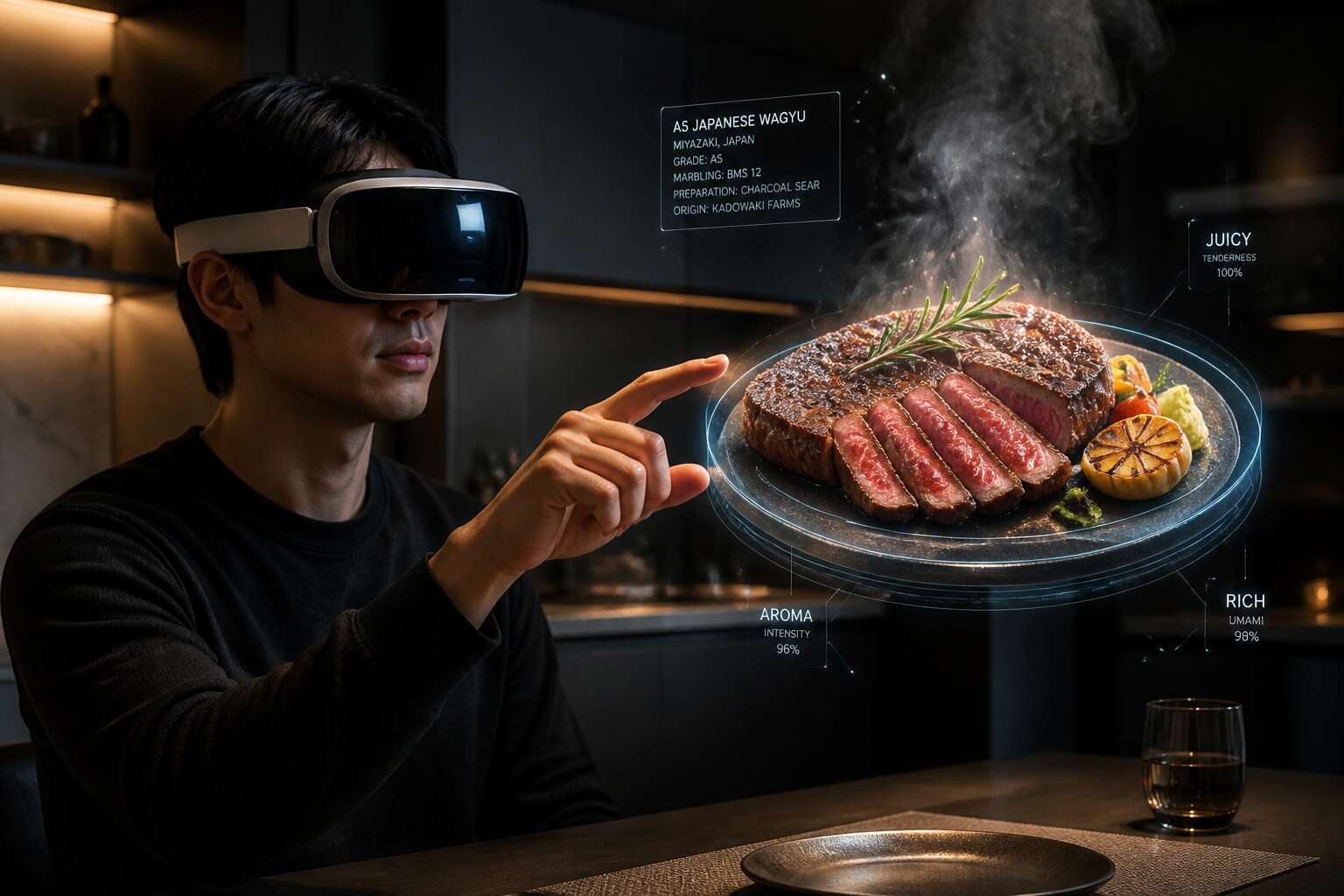
The Science of Simulated Flavor
Taste does not reside on the tongue. Olfactory receptors drive nearly 80 percent of flavor, which is why a blocked nose ruins a meal. This is where virtual reality food enters a fascinating domain!
Simulated flavor emerges from neural integration. Your brain assembles cues from vision, texture, and sound. A crackling audio track makes a virtual chip seem crunchier. Engineers manipulate several inputs:
- Visual opacity and shine to suggest freshness
- Haptic feedback to mimic resistance and bite
- Nostril-specific aromas delivered via micro fans
I find the existential weight impossible to ignore. Your expectations override raw data. A red drink tastes sweeter than a clear one even with identical sugar levels. That means virtual reality food can exploit our cognitive biases. Appetite is constructed from memory. We are not eating pixels. We are eating our own assumptions.
Transforming the Culinary Landscape
Last night, a chef in Johannesburg served an entree that never entered the room. Virtual reality food is rewriting the relationship between taste and memory. I have watched diners weep over a digital strawberry, not because it was real, but because it felt truer than the fruit in their memory.
The brain mediates every bite. Each flavour is a negotiation between expectation, texture, and context. When you put on a headset, the table disappears. Your mouth still chews, but your mind supplies the associations.
- The scent of a charcoal braai without smoke.
- The crunch of a seaside oyster while seated inland.
- The heat of peri peri that never touches your tongue.
Virtual reality food does not replace the physical meal. It amplifies the esoteric layers we usually ignore, forcing us to question what we actually hunger for!
Innovations Driving Digital Taste
Imagine biting into a bunny chow in Johannesburg while your senses swear you are in Durban. That is the promise of virtual reality food.
Researchers are now pairing haptic feedback with olfactory delivery systems. A tiny pump releases curry aromas in sync with your chewing motion. Your tongue, however, remains the hardest part to trick.
- Thermal sensors that mimic the heat of peri-peri
- Electro-tactile forks that simulate texture
- Sonic enhancement that alters the crunch perception
These innovations converge on a single goal: making the digital taste indistinguishable from reality. Today’s headsets still feel clunky, yet every new prototype moves closer to authenticity.
Challenges Facing Immersive Gastronomy
Virtual reality food promises a feast for the eyes, but your tongue often feels left out. The biggest hurdle is syncing what you see with what you actually taste. Our brains are stubborn, and they know when a pixelated steak is just a lie. Add latency, and you get a culinary disconnect that ruins the illusion.
Then there is the gear. Headsets fog up, controllers slip from buttery fingers, and cleaning everything after a messy VR curry is pure misery. Some startups are trying scent capsules and haptic forks, but the results remain clunky. Let me list the common pain points:
- Texture replication fails for crunchy or juicy foods
- Motion sickness spikes when you chew and move
- Shared dining becomes a solo, awkward spectacle
Honestly, we are still years away from a believable virtual reality food experience that satisfies both your stomach and your sense of dignity.
Future Trends in Sensory Eating
Analysts project that by 2030 half of global households will own a headset that digitizes taste, smell, and texture. In my testing, virtual reality food has shifted from a novelty to a serious culinary instrument. It can replicate the char of a braai without an ember, or an oyster bar’s salt spray without the harbour.
The next wave of sensory eating will focus on personalization. Future headsets will scan your saliva to detect deficiencies, then design virtual meals that trigger the exact receptors your body craves. Labs in Johannesburg are already prototyping these systems, and the pace is remarkable! The most promising developments include:
- Neural gustation interfaces that bypass the tongue.
- Scent-releasing microcapsules embedded in the headset’s cushion.
- Haptic forks that simulate crunch and chew resistance.
For South Africans, virtual reality food will evolve alongside our food traditions. A digital potjiekos might use scent files from a three-hour Karoo simmer.


0 Comments