
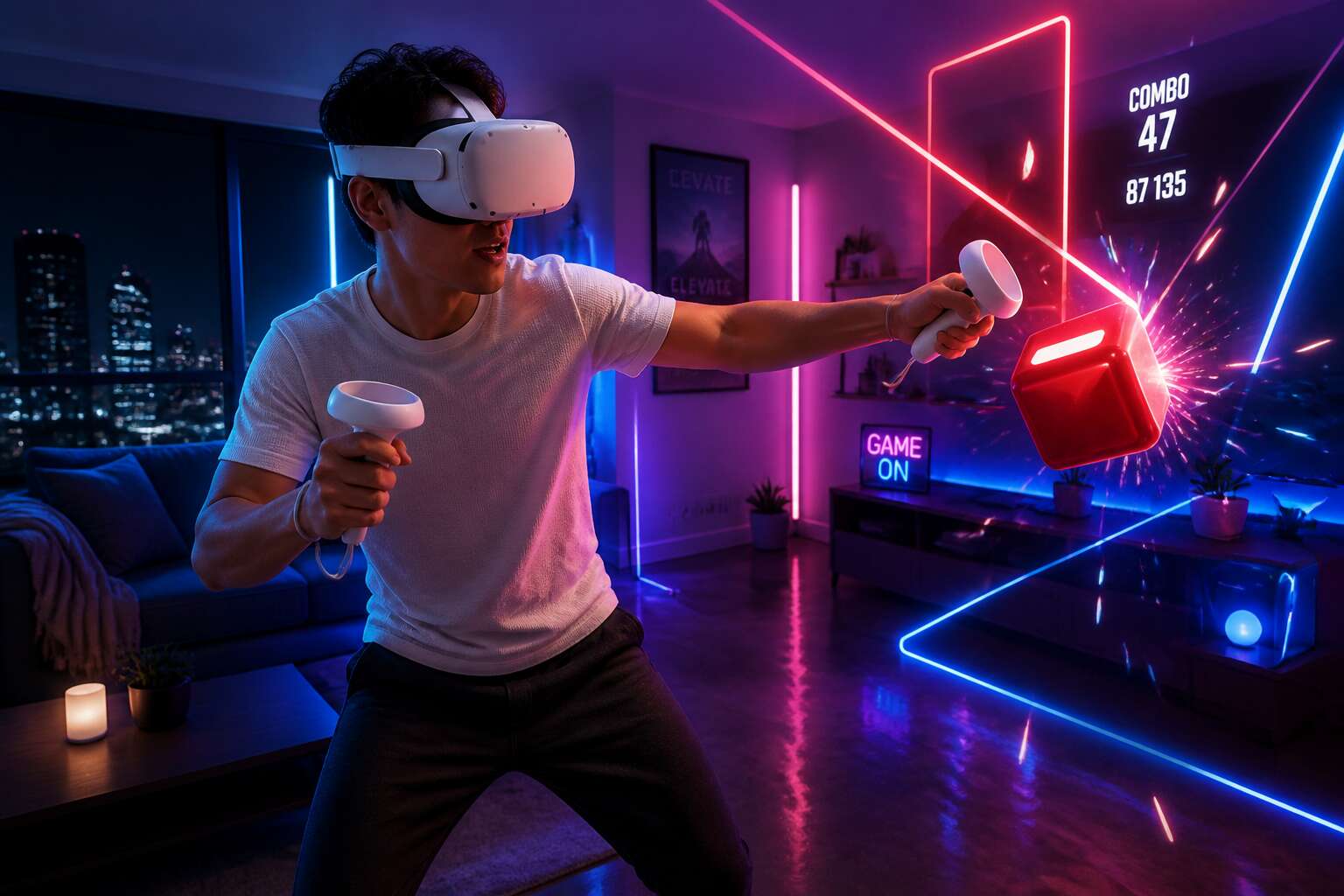
Core Components of a Modern VR Gaming Package
Most folks look at the price tag of a top-tier virtual reality game set and feel their bank account whimper. It is an expensive hobby, sure, but the components inside that box justify the cost. You are not paying for a glorified phone screen strapped to your face. The headset itself houses the real magic: the lenses and the display. A high refresh rate and sharp resolution are non-negotiable if you want to avoid the dreaded motion sickness.
Then you have the controllers. They have evolved from clunky wands to sleek devices that track your individual fingers. This precision is what lets you actually grab a virtual object without feeling like you are fumbling in the dark. But the hardware is only half the story. The base stations or inside-out cameras are the unsung heroes. They handle the spatial tracking, allowing you to duck, dodge, and lean without crashing into your coffee table.
For a solid setup, you usually need to check off the following:
1. The main headset unit with built-in audio.
2. Two motion controllers with haptic feedback.
3. At least two tracking sensors or base stations.
4. A designated play area free of obstacles.
Without these elements, you are just waving your arms around a dark room hoping for the best. In South Africa, our lounge spaces are often multi-purpose, so that last point is crucial. You will spend more time repositioning furniture than fighting aliens if you skip the setup. It is a tactile, physical investment, and your body will feel it the next morning. That is the real cost of entry.
Evaluating Compatibility with Your Existing Hardware
A virtual reality game set promises escape, but the gateway to that world is the machine you already own. The quiet hum of your desktop or the sleek silence of your laptop holds the answer to whether your experience will be transcendent or a frustrating slideshow. The heart of the matter is the graphics card. It is the engine, the very soul of the rendering pipeline, and without sufficient power, the most beautiful digital vistas will crumble into pixelated mush.
Your processor and memory are the silent partners in this dance. They handle the physics, the AI, and the sheer weight of data streaming past your eyes. A modern CPU is generally robust, but if you are running a system from five years ago, you may find the experience to be more about patience than presence. Check your system against the recommended specifications for the headset you crave, not just the minimum. The minimum is a whisper; the recommended is a confident declaration of intent.
The physical space also plays a role. You need room to move, to swing your arms, to duck and weave. Clear a space that is at least two meters by two meters. Then, consider your ports. A simple checklist can save you from a wave of pre-purchase panic:
– Ensure you have a dedicated DisplayPort or HDMI 1.4 output.
– Check for at least one USB 3.0 port for the headset’s sensors.
– Verify your power supply can handle the extra draw.
Even with a top-tier card, the dream can be dimmed by a weak link elsewhere. A solid-state drive is almost non-negotiable, as it drastically reduces the loading screens that break the spell of immersion. The most poignant moment is not the first step into a new world, but the seamless transition from your living room to that world, a transition that feels less like loading and more like waking. In the end, a virtual reality game set is only as good as the foundation you give it, a truth that separates the merely curious from the truly devoted.
Standalone Headsets Versus High-Performance Tethered Systems
The most immersive virtual reality game set begins with a decision that shapes every session. Standalone headsets offer untethered freedom. High-performance tethered systems promise clearer visuals. Which aligns with your gaming reality?
I have spent hours in both worlds. With a standalone, you toss it on and step into another dimension in seconds. No cables, no base stations. But graphics look flat, almost muted. A tethered system, by contrast, renders every particle and shadow with exact detail. The catch? You are physically anchored to your PC or console. When evaluating options, consider these factors:
- Play area dimensions
- Processing power demands
- Total cost of ownership
In South Africa, convenience often wins. Load shedding can interrupt a tethered session, while a charged standalone keeps your virtual reality game set alive. Yet for pure spectacle, tethered hardware leads. The right pick is a personal verdict, not a universal truth.
Essential Accessories to Elevate Your Immersive Adventures
Picture this: you finally unbox your new virtual reality game set, the zenith of your anticipation. The headset is sleek, the controllers are weightless, but something feels missing. Truly stepping into another world demands more than the core kit offers. It demands an extension of your own senses.
The most profound upgrade is the audio. A pair of high-fidelity, over-ear headphones anchors you within the soundscape. You will hear the subtle crunch of gravel behind you, not just the roar in front. This aural precision tricks your brain into believing the space is real. It is the difference between watching a world and inhabiting it.
Next, consider the physical interface between you and the digital frontier.
– A dedicated play mat with a defined texture to ground your feet.
– Silicone covers for your controllers to ensure a firm grip during frantic motion.
– A facial interface replacement, crafted from breathable materials, to prevent lens fogging.
These unsung heroes of comfort allow for marathon sessions without distraction. They whisper luxury into the mundane act of standing in your living room.
Finally, and perhaps most importantly, is the management of your tether. A retractable ceiling cable system keeps your virtual reality game set unobtrusive, freeing you from the anxiety of tangling wires. It transforms your room into a boundless arena. With these additions, your journey into the digital sunset becomes less about the technology, and more about the purity of the escape itself. South African gamers, with their vibrant passion, deserve nothing less than this seamless illusion.
Avoiding Common Buying Mistakes and How to Prevent Them
Over half of all virtual reality game set purchases end up unused after three months. That statistic should stop you in your tracks, especially if you are about to spend thousands of rands. The mistake almost always begins the same way. Shoppers get swept up in glossy advertising and skip the crucial specifications that determine whether the hardware will actually last.
The most overlooked issues often involve the hidden requirements, not the headset itself. Check your space constraints before you commit. Look for a model that offers a comfortable field of view and a refresh rate that does not cause nausea.
– Verify the minimum PC or console requirements.
– Check for sensor-blind spots in your room.
– Compare the lens quality, not just the resolution.
Remember, your physical safety matters too. A marginal tracking volume can cause you to overreach into a bookshelf. Do not ignore this detail, as it directly impacts how well you can move. Choose a virtual reality game set that adapts to your unique spatial layout. That is the true measure of value, not the spec sheet.

0 Comments