
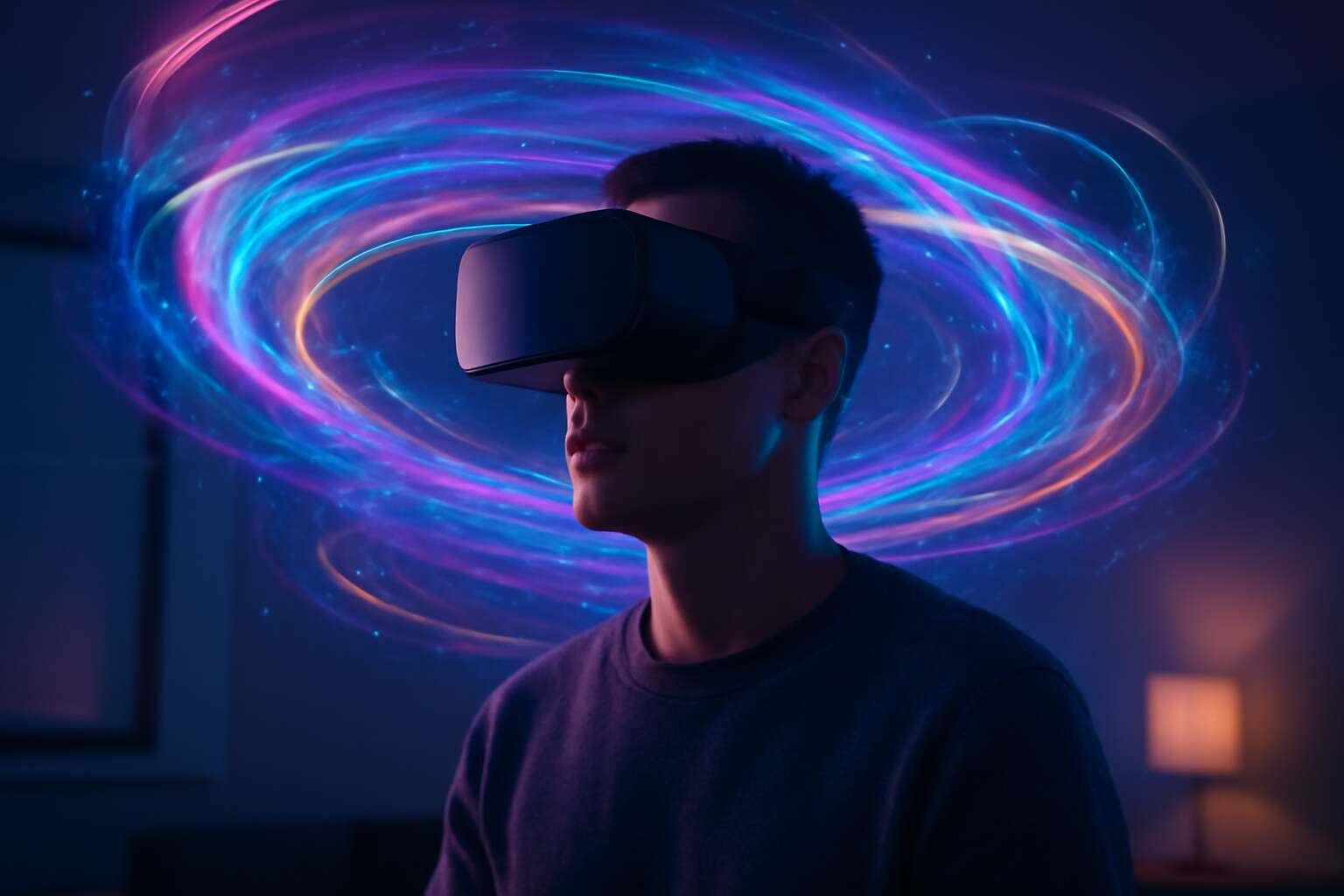
Understanding immersive VR video experiences
What constitutes a VR video experience
Immersive visuals transform watching into an experience. In some tests, immersive formats boost retention by up to 75%. Understanding immersive virtual reality videos means looking beyond 360-degree footage to how depth, motion, and space pull viewers in.
- 360-degree horizon and freedom to look around
- Stereoscopic rendering that creates believable depth
- Head tracking that mirrors natural movement
- Spatial audio that responds to orientation and focus
A true VR video experience blends these cues with storytelling that resonates with South African audiences, inviting curiosity rather than distraction! When the elements align, attention shifts from passive viewing to active engagement, and the medium becomes a canvas for exploration and emotion.
Core technologies powering VR video
Step into a medium that makes a screen feel like a doorway. In virtual reality videos, 86% of viewers report a deeper emotional pull when the experience is more than a clever illusion.
Core technologies powering VR video bring depth, motion, and space to life with a distinctly South African resonance: curiosity over distraction. The following pillars underpin a convincing arc:
- Foveated rendering to prioritize detail where the eye is looking, saving bandwidth and battery life
- Volumetric capture for lifelike characters and spaces you can navigate around
- Six-degrees-of-freedom tracking for natural movement through scenes
- Low-latency pipelines to keep motion feel immediate and comfortable
When these cues harmonize with storytelling, the result is a canvas for exploration and emotion rather than a temporary scroll break.
Difference between VR video and standard video
In virtual reality videos, the screen stops being a surface and starts being a doorway to another world. Immersion happens when sight, sound, and motion align, turning a scene into a lived experience that invites you to linger, look around, and feel the space between objects. It’s storytelling that breathes; the audience is not just watching but entering.
Understanding the difference from standard video is about agency, perception, and pace. Below are key contrasts that shape how a narrative lands in a viewer’s mind:
- Viewer-centric perspective that follows head and body movement for natural navigation
- Spatial audio and depth cues that establish real-world context and distance
- Non-linear storytelling and active engagement, not a fixed, linear sequence
For South African audiences, this shift foregrounds place, culture, and immediacy—content that adapts to where you are and how you choose to explore it, rather than forcing a single path through a story.
Common formats and platforms for VR video
Immersion is a doorway, not a display, and virtual reality videos invite you to linger wherever you choose to look. In South Africa, storytellers blend place, culture, and immediacy into frames that breathe with the audience.
Understanding immersive experiences means embracing formats and platforms that support movement and presence. Common formats include 360-degree video with head tracking; stereoscopic 3D for depth; and spatial audio that places you in space.
- 360-degree video with head tracking
- Stereoscopic 3D for depth
- Spatial audio that places you in space
Delivery platforms like YouTube VR, Oculus Quest, and SteamVR broaden access for local storytelling. I’ve witnessed audiences lean in, the room quieting as sound wraps around them.
Pace and agency matter: viewers explore at their own tempo, guided by what they see and hear.
Choosing hardware for VR video viewing
Immersion in virtual reality videos works like a good invitation: it pulls you in, not merely onto a screen. The secret is presence, not polish, and hardware that respects your comfort makes you forget you’re wearing gear. A Cape Town filmmaker, sipping rooibos, once said, “presence beats polish,” and the line sticks every time the room grows quiet as sound swirls around you.
Choosing hardware for VR video viewing is a balancing act of movement, clarity, and stamina. Priorities include per-eye resolution, refresh rate, and IPD adjustment, plus a comfortable fit for long sessions. Standalone headsets offer freedom for storytelling on location; PC-tethered rigs push fidelity when precision and tracking matter.
- Standalone headsets
- PC-tethered headsets
- Mobile VR options
SEO and content strategy for immersive video content
Keyword research for VR topic ideas
Engagement isn’t a flat joke—it’s a 360-degree commitment, and virtual reality videos demand a strategy that matches the spectacle. In South Africa’s evolving digital scene, immersive content wins when SEO isn’t an afterthought but a co-star.
Kick off with keyword research for VR topic ideas that align with the buyer’s journey. Build content pillars that blend narrative pace with practical insight, so readers and algorithms both nod in approval.
- Seed keyword ideas and long-tail variations for VR topics
- Story-first scripts that showcase real-world benefits
- Platform-ready metadata and scene descriptions
Keep the copy human, avoid jargon, and tailor metadata to voice search as well as traditional queries. When in doubt, let the viewer’s curiosity lead rather than the KPI dashboard—it makes the virtual reality videos sing.
On-page optimization for immersive video pages
In South Africa’s fast-lane digital scene, attention is currency; recent data shows half of online audiences bail on immersive experiences if a page stutters for more than two seconds. For virtual reality videos, thoughtful meta titles and scene descriptions matter just as much as speed.
On-page optimization for immersive video pages hinges on clarity, accessibility, and narrative rhythm. Craft a page structure that readers and algorithms can follow, with clean headings, intuitive media naming, and alt text that speaks to the viewer’s curiosity. Here are considerations:
- Meta titles and descriptions calibrated to viewer intent
- Descriptive alt text and scene descriptions for thumbnails
- Structured data signals (VideoObject) and a sitemap for video assets
Done well, the page becomes a quiet magnet, guiding discovery through immersive storytelling rather than hype!
Schema markup and rich results for immersive media
In South Africa’s fast-lane digital scene, two seconds is a currency—let it drip, and you’ll lose half your audience to stutter and skip. For virtual reality videos, the first breath matters as much as the last frame; meta titles, scene descriptions, and a clean page signal intent before the viewer hits play.
SEO and content strategy for immersive media thrive on clarity, accessibility, and structured signals. A lean VideoObject implementation, paired with a sitemap that lists every asset, helps search engines pair context with experience. Alt text should spark curiosity and tell a mini-story, not simply describe pixels.
To guide the signal, consider a compact checklist:
- VideoObject attributes: name, description, duration, uploadDate
- thumbnailUrl, contentUrl, and embedUrl
- JSON-LD implementation alongside sitemap signals
- Alt text that teases the scene and invites action
Together, these strands pull readers toward immersive media, turning curiosity into clicks and clicks into engagement.
Titles, thumbnails, and descriptions that convert
South Africa’s fast-lane digital scene treats every second as a decision point. For virtual reality videos, the opening breath matters as much as the final frame. Meta titles, scene descriptions, and a clean signal of intent before the viewer hits play shape expectation and trust!
- Concise, benefit-led titles that reflect the scene
- Thumbnails that imply depth and immersion
- Description copy that teases a moment you can only experience
To guide the signal, VideoObject metadata paired with a sitemap listing every asset, and alt text that teases the scene, align search intent with viewer appetite—perfect for virtual reality videos.
Production and post-production workflows for VR video
Pre-production planning for 360° content
Production for virtual reality videos hinges on planning as much as capture. Industry data suggests thorough pre-production can reduce post-production time by up to 30%, delivering tighter timing and fewer stitching problems. For 360° content, every choice—camera placement, lighting, and audio routing—must account for omnidirectional viewing!
Before you press record, consider these essentials:
- 360° camera rigs and mounting strategies that keep parallax in check
- Consistent lighting across all directions to avoid hotspots
- Robust audio routing and ambisonic capture planning
- Guardrails for camera transitions and scene continuity
- Data management, backups, and workflow logging
In post, stitching and color work must feel seamless across the sphere. A well-defined workflow includes multi-pass stitching checks, cross-camera color matching, and precise audio syncing, followed by quality assurance before export to standard VR formats. These steps help ensure immersive timelines are met and the final product remains engaging for audiences in South Africa and beyond.
Camera rigs and capture techniques
Production for virtual reality videos hinges on planning and gear as much as capture. On-location shoots rely on versatile rigs that keep parallax in check and allow fluid, omnidirectional action. Camera placement and mounting are chosen to read consistently from every angle, while steady supports guard against jitter in tough environments. Data flow on set is designed—backups, quick-look checks, and clear shot logs—so post isn’t chasing missing footage.
- Rig stability and parallax control
- Cross-camera color calibration
- Data management and backups
Post-production workflows turn naked capture into immersive spheres. A disciplined approach includes multi-pass stitching checks, cross-camera color matching, and precise audio syncing, followed by QA before export to standard VR formats. That discipline helps timelines stay intact for audiences in South Africa and beyond.
Audio capture for spatial sound
In immersive storytelling, presence is the currency. Roughly 75% of viewers report a visceral sense of “being there” when VR unfolds around them. Production and post-production workflows for virtual reality videos must move in lockstep, letting sound and image negotiate space as a single narrative.
On set, spatial sound is more than a mic choice—it’s a mapping exercise. Capture with ambisonic or dense microphone arrays, and string the feeds to a single timebase via accurate timecode; monitor in real time to preserve directional integrity.
- On-set spatial audio capture with ambisonic mics
- Timecode-based synchronization across rigs
- Real-time monitoring for continuity
Post-production turns naked capture into an immersive sphere: stitching checks, cross-talk reduction, color consistency across rigs, and audio mixing for 3D sound. QA before export to standard VR formats keeps timelines intact for audiences in South Africa and beyond.
These workflows ensure virtual reality videos land with impact.
360° video stitching and stabilization
Great VR production treats stitching and stabilization as narrative decisions, not afterthought polish. In practice, you align rigs, calibrate lenses, and validate a single horizon so the viewer never snaps out of the moment. For virtual reality videos, stitching quality is the difference between magic and mischief; editors bias the illusion with careful cross-fade and warp controls while QA ensures seams stay invisible.
Key post steps include:
- 360° stitching checks and seam alignment
- Stabilization across rigs to maintain horizon and motion continuity
- Color matching and exposure consistency across cameras
The result is a seamless sphere that feels less like a capture and more like a scene that unfolds around the observer.
Color grading and mastering for immersive viewing
“Color is the compass in a 360-degree hourglass,” a veteran colorist once said. In production and post-production workflows for virtual reality videos, color grading and mastering become ethical crafts, shaping how immersion feels. A disciplined pipeline maps color spaces, ensures cross-camera fidelity, and applies tonal mapping that respects the viewer’s horizon, so the scene unfolds around the observer rather than collapsing into mismatched hues!
Operationally, the flow anchors color fidelity through three pillars.
- Establish a universal color pipeline across rigs
- Perform per-camera color matching and exposure alignment
- Apply spherical tonemapping and headset-ready color mastering
Quality control and playback testing
Quality control isn’t glamorous, but it’s the quiet drumbeat behind every immersive moment in virtual reality videos. In our studio, I watch latency, seam integrity, and color continuity collide with the viewer’s sense of presence—and the results swing between spellbinding and couch-bound. A single misread frame or horizon mismatch can yank you from the scene faster than a prop on a rushed shoot. The aim is simple: headset-ready playback that respects the horizon wherever the viewer roams!
- Playback across major headsets and platforms
- Encoding artifacts and bitrate consistency
- Latency and head-tracking fidelity under real conditions
To that end, a tight playback regime spans devices and environments from Cape Town to Joburg. All findings feed back into the production pipeline, keeping the content cohesive and present across SA audiences.
Distribution, accessibility, and monetization of immersive video
Platform distribution strategies for VR video
Immersive experiences travel farthest when they are accessible. A recent study shows audiences remember up to 30% more in immersive video when streams stay smooth across devices. For virtual reality videos, accessibility on smartphones, standalone headsets, and desktops is essential, not optional.
Platform distribution strategies for VR video balance reach, performance, and discovery. In markets like South Africa, the mix must respect data realities and diverse viewing contexts.
- Platform-native apps and creator marketplaces
- Social VR and live-event ecosystems
- Web-embeddable players and app-store listings
Accessibility and monetization go hand in hand. Subtitling, adaptive bitrate, multilingual audio, and offline caching widen audiences; sponsorships, licensing, and premium experiences monetize immersion.
Accessibility and inclusivity in immersive content
Audiences remember up to 30% more in immersive video when streams stay smooth across devices. In South Africa, that quiet truth becomes a map: the best virtual reality videos travel fastest when they glide across smartphones, standalone headsets, and desktops alike.
Accessibility and inclusivity are not add-ons—they are the doorway to broad reach. We witness this truth daily. Subtitling, multilingual audio, and adaptive bitrate unlock audiences across urban centers and rural corridors where data realities differ as wildly as night and day. Offline caching keeps the story alive when connections flinch.
- Subtitling and captions
- Multilingual audio tracks
- Adaptive bitrate streaming
- Offline caching for low-connectivity zones
For monetization, accessibility is a gateway, not a gate. Sponsorships, licensing, and premium experiences reward creators who invest in inclusive design for virtual reality videos, turning shared wonder into enduring value.
Monetization options for immersive video content
Audiences remember up to 30% more in immersive video when streams stay smooth across devices. In South Africa, that truth acts as a map for distribution—pushing virtual reality videos to smartphones, standalone headsets, and desktops with equal ease. Smooth delivery isn’t a luxury; it’s the doorway to scale and relevance.
Distributing immersive content means meeting viewers where they gather, across urban cores and rural corridors. Platforms must feel native, experiences must be accessible, and teams should plan for cross-platform playback. Accessibility isn’t an afterthought; it’s the ticket to broad reach.
- App stores for standalone headsets
- Web and cross-platform players
- Social VR spaces and enterprise portals
Monetization in this field is about enduring value rather than gimmicks. Options include sponsorships, licensing, and premium experiences that unlock deeper narratives for brands and audiences alike.
- Sponsorships and brand integrations
- Licensing of content and rights management
- Premium experiences and paid unlocks
Analytics and performance metrics for VR video
Smooth delivery transforms virtual reality videos from novelty to necessity in South Africa’s varied networks. Audiences remember up to 30% more when streams stay smooth across devices, and analytics confirm that performance is the fastest route to scale and relevance in immersive storytelling.
Analytics and performance metrics guide distribution choices and cross-platform readiness. Track latency, buffering events, frame rate stability, and CDN health to map device reach. This honest view helps tailor experiences for smartphones, standalone headsets, and desktops alike.
- Latency and frame-rate stability
- Completion and engagement rates
- Cross-device reach and playback success
Accessibility isn’t afterthought; it’s a catalyst for monetization. Measurements of captioning coverage, audio descriptions, and language options reveal where premium experiences and licensed content will resonate with users and sponsors alike.
0 Comments